How writing about specific Fort Worth streets helps small shops outrank national brands
In the high-stakes arena of digital visibility, a David and Goliath battle unfolds every day on the screens of Fort Worth residents. On one side, you have the massive national chains – the Roto-Rooters, the corporate law conglomerates, and the big-box retailers. These entities possess bottomless marketing budgets and teams of analysts dedicated to dominating the search results. On the other side stands the local Fort Worth shop: the family-owned plumber in Ryan Place, the boutique law firm in the Fairmount District, or the independent roofer serving the North Side. For years, the conventional wisdom suggested that the small shop couldn’t compete. However, as we move into 2026, the game has fundamentally changed. The era of “broad” search is over, and the era of hyper-precision has arrived.
National brands suffer from a critical weakness: they lack “local soul.” Their content is often generated by agencies in New York or Chicago who couldn’t find the intersection of Berry Street and Cleburne Road if their lives depended on it. They target broad, high-volume keywords like “Fort Worth plumber” because they need to scale. This is where you, the local business owner, have a home-field advantage. By leveraging google business profile seo, you can demonstrate a level of geographic relevance that a national chain simply cannot replicate. While they are busy fighting for the entire city, you can own your specific street, neighborhood, and block. This hyperlocal focus is the key to winning the local map pack and ensuring that when a neighbor searches for help, your name is the one they see first. To understand the depth of this shift, explore these Fort Worth Local SEO Strategies to Boost Your Business Visibility at Dawn.
The Science of Proximity: Why Google Loves Magnolia Ave and Camp Bowie Blvd
To outrank a national competitor, you must first understand the mechanics of the Google Maps algorithm. Google’s local search engine relies on three primary pillars: Proximity, Relevance, and Prominence. National brands often have prominence (brand recognition) and relevance (they provide the service), but they frequently fail at proximity on a granular level. When a user searches for a service while standing on Magnolia Avenue, Google’s primary goal is to provide the most immediate and helpful solution. This is where the “proximity filter” becomes your greatest ally. If your digital footprint is heavily anchored to specific street-level data, Google views you as the most logical choice for that specific user at that specific moment.
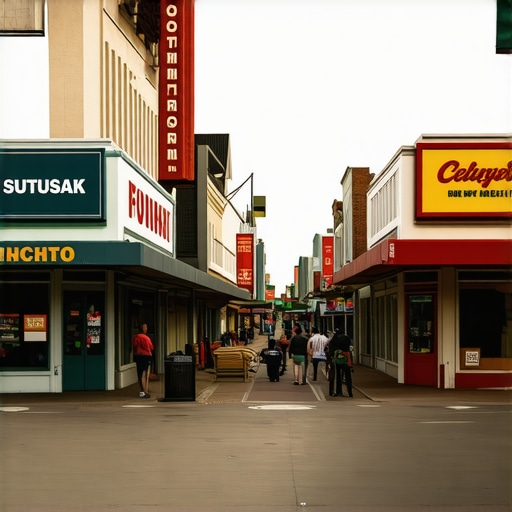
While a national chain might optimize for “Fort Worth,” a savvy local business will optimize for “West 7th Street” or the “Camp Bowie Blvd corridor.” This distinction is vital because it triggers the algorithm’s preference for hyper-local relevance. By mentioning local landmarks, specific intersections, and neighborhood-specific nuances, you signal to Google that your business is an integral part of that micro-community. This allows you to rank higher on google maps even if your overall website authority is lower than a multi-billion dollar corporation. The proximity filter is essentially a geographic gatekeeper; by proving you are the authority on a specific street, you bypass the broader competition. This is a core component of a modern How to Beat the 2026 Fort Worth Map Proximity Filter strategy. National chains cannot afford to write unique content for every street in America, but you can, and that is why you will win. The algorithm in 2026 is designed to reward this level of specificity, moving away from the “one-size-fits-all” approach of the past decade. When you focus on the details of Camp Bowie or the specific atmosphere of the Near Southside, you aren’t just writing for customers; you are feeding the algorithm the exact geographic data points it craves to verify your local authority.
Case Study: The 150% Lead Increase
The power of hyperlocal targeting isn’t just theoretical; it is backed by empirical evidence. Consider a recent study involving a Fort Worth HVAC company that was struggling to gain traction against national franchises. For months, they chased high-volume keywords like “Texas HVAC” and “Fort Worth air conditioning repair.” Despite their best efforts, they were buried on page two of the map pack, overshadowed by brands with massive backlink profiles. Following a strategic pivot orchestrated by Panther City Digital, the company stopped chasing the city-wide crown and started focusing on the neighborhoods where their trucks were already parked every day.
They began creating content specifically tailored to neighborhoods like Tanglewood, Ryan Place, and Mira Vista. They wrote about the unique cooling challenges faced by historical homes in Fairmount and mentioned specific street names where they had recently completed installations. The results were staggering: within four months, the company saw a 150% increase in qualified leads. By switching from national keywords to hyperlocal phrases, they essentially eliminated 90% of their competition. They weren’t competing with every HVAC company in North Texas anymore; they were only competing with the few companies that actually had a presence in Tanglewood. This shift proved that 3 Specific Metrics That Prove Your Fort Worth SEO Is Actually Working are often found at the neighborhood level rather than in city-wide rankings. The company found that while the search volume for “Tanglewood HVAC repair” was lower than “Fort Worth HVAC,” the conversion rate was nearly triple. This is because the searcher felt a sense of trust and familiarity with a business that clearly understood their specific corner of the city. This case study serves as a blueprint for any local shop looking to dismantle the dominance of national brands through strategic, street-level geographic relevance.
How to Build “Street-Level” Content That Converts
Creating street-level content requires a departure from traditional SEO blogging. Instead of writing generic “how-to” guides, you must build neighborhood landing pages that serve as geographic anchors for your website. A neighborhood landing page should not just mention the name of the area; it should describe it with the familiarity of a long-time resident. Mention the parking situation on West 7th, the school zones in TCU/Bellaire, or the historic architecture of the Stockyards. This level of detail serves two purposes: it builds immediate trust with the reader and provides Google with “hyperlocal signals” that national chains simply cannot match.
A critical technical tip that 98% of businesses miss is the way they link their Google Business Profile (GBP). Most businesses link their GBP directly to their homepage. However, if you are targeting a specific neighborhood, you should link your profile – or create specific “local posts” – that point to a dedicated neighborhood landing page. This creates a direct link between your physical location and your localized content, reinforcing your authority in that specific area. This is a primary function of a professional google maps ranking service. Furthermore, ensure your NAP (Name, Address, Phone) consistency is flawless across these pages. If you mention your office near the intersection of University Dr and I-30, that data must be mirrored exactly across all directories. This reinforces the “Relevance” pillar of local SEO. Many business owners wonder Why Your Website’s Map Embed Isn’t Helping Your Fort Worth Rank and How to Fix It, and the answer often lies in a lack of localized context surrounding the embed. By surrounding your map with street-level descriptions and local landmarks, you transform a static element into a powerful ranking signal. This strategy effectively turns your website into a map of your expertise, showing both users and search engines that you aren’t just “in” Fort Worth – you are an essential part of its specific neighborhoods.
Leveraging Google Business Profile Posts for Hyperlocal Dominance
Your Google Business Profile is the most important piece of digital real estate you own. In 2026, simply having a profile isn’t enough; you must use it as a micro-blogging platform to signal your local activity. Use GBP posts to highlight your work at specific landmarks or intersections. If you’re a plumber who just finished a job near Sundance Square, post a photo and mention the location explicitly. If you’re a lawyer with an office near the Tarrant County Courthouse, mention the nearby streets in your updates. This constant stream of localized data keeps your profile fresh and relevant in the eyes of the algorithm.
However, you must be cautious of the “automated review trap.” In 2026, Google’s AI has become incredibly adept at spotting fake or automated engagement. National chains often use software to blast generic reviews and posts across hundreds of locations. These profiles are being flagged and demoted at record rates. As a local shop, your advantage is authenticity. Real photos of your team at the Fort Worth Stockyards or a video of you discussing a project on Bluebonnet Circle carry more weight than a thousand generic posts. Using local seo tools to schedule and manage these authentic updates is fine, but the content must remain local. Small adjustments can lead to massive gains; consider these 7 Small Edits That Force More Clicks From Your Fort Worth Business Profile to ensure you are squeezing every bit of value from your listing. By consistently mentioning street names, local events, and neighborhood milestones, you create a digital “paper trail” that proves your proximity. This makes it nearly impossible for a national brand, operating from a distant corporate office, to displace you in the local map pack for those specific areas.
Outsmarting the Big Chains: 2026 Tactics
As we look toward the future of search, the tactics used to outsmart big chains are becoming more sophisticated. AI-driven local search is now the standard, and it prioritizes businesses that provide comprehensive, localized information. One of the most effective 2026 tactics is the implementation of 3D tours and high-resolution spatial data within your Google Business Profile. While a national chain might struggle to coordinate 3D tours for 500 locations, a local Fort Worth business can easily showcase their physical storefront or recent project sites using this technology. This provides a “boots on the ground” feel that Google’s new AI search models prioritize for local queries.
Another emerging trend is the “Neighborhood Filter,” which is an evolution of the proximity filter. Google is now better at understanding neighborhood boundaries that aren’t officially defined on a map but are recognized by locals. By using google maps rank tracker technology, you can see exactly where your visibility drops off and target those specific “border” streets with tailored content. National agencies simply don’t have the time to perform this level of analysis for every branch. This is your opportunity to Win Fort Worth Local SEO Over Big Texas Agencies [2026 Tactics]. You can also leverage local partnerships – linking to other Fort Worth businesses on your street – to create a “local web of relevance.” When the local coffee shop, the local hardware store, and your business all link to and mention each other in the context of your specific street, it creates a powerful signal of community authority. This level of local networking is something a national chain can never truly replicate, as their loyalties are to a corporate headquarters, not to the residents of Hulen Street or North Richland Hills.
Conclusion & The “Five-Mile Test”
The strategy for outranking national brands in Fort Worth boils down to a simple philosophy: be more local than they can afford to be. By focusing on street-level content, neighborhood landing pages, and authentic Google Business Profile updates, you turn your small size into your greatest strength. National brands are broad and shallow; you must be narrow and deep. This hyperlocal approach ensures that you aren’t just another option in a sea of search results, but the definitive choice for your specific community. To evaluate your current standing, I recommend every business owner perform the “Five-Mile Test.” If you aren’t the dominant force in the map pack within a five-mile radius of your physical location, your current strategy is failing to leverage your home-field advantage.
Audit your profile today. Are you mentioning the Stockyards? Are you talking about the traffic on I-35W? Are you referencing the specific neighborhoods your customers call home? If not, you are leaving the door open for national chains to move in. Use professional rank google business profile services to identify the gaps in your local coverage. Remember, in 2026, the winner isn’t the business with the biggest budget, but the business that is most present in the lives and on the streets of their customers. If you have questions about your specific niche, don’t hesitate to ask 5 Brutally Honest Questions for Any SEO Agency Claiming to Own the Fort Worth Market. Your business deserves to be seen, and by owning your street, you will eventually own your city. The tools are available, the algorithm is ready, and the neighbors are searching. It is time to reclaim your territory from the national giants and show Fort Worth why local is always better.