We Tested 5 Map Ranking Tools and This One Actually Finds Your Fort Worth Gaps
If you own a business in Tarrant County, you’ve likely experienced the “Fort Worth Proximity Paradox.” You’re sitting in your office near West 7th, you pull out your phone, search for your service, and – boom – there you are at #1. You feel like the king of Cowtown. But then you drive ten minutes north to the Stockyards or head over to a job site in Fossil Creek, run the same search, and you’ve vanished. You aren’t just off the first page; you’re practically invisible.
I’m John Buchanan, and I’ve spent years deconstructing the nuances of Dallas and Fort Worth local search. I’ve seen countless business owners – plumbers, lawyers, and roofers alike – get lulled into a false sense of security by “vanity rankings.” Most tools tell you that you rank #2 in “Fort Worth,” but “Fort Worth” is 350 square miles of diverse neighborhoods and varying search intent. In 2026, a single ranking number is a lie. To actually win, you need to find the gaps where your competitors are eating your lunch. I decided to put the top 5 local seo tools to the test to see which one actually reveals the “dead zones” in your Fort Worth map coverage.
Why Traditional Rank Tracking Fails Fort Worth Businesses
The biggest mistake I see local agencies and business owners make is relying on traditional, static rank tracking. These tools ping Google from a single data center or a fixed zip code point. But Google’s 2026 algorithm doesn’t work that way. The proximity filter has become more aggressive than ever. Google wants to show the most “hyper-local” result possible to the user. This creates what I call the “Swiss Cheese” effect of local rankings.
Imagine your ranking map as a slice of Swiss cheese. You have solid coverage (the cheese) right around your physical location, but as you move toward Hulen or out toward the Mid-Cities, holes (the gaps) start to appear. Traditional tracking doesn’t show you the holes; it only shows you the cheese. This is why you might “rank” on paper but your phone isn’t ringing from the neighborhoods you actually want to service. A single ranking number is a vanity metric that hides the truth about your google maps ranking service performance.
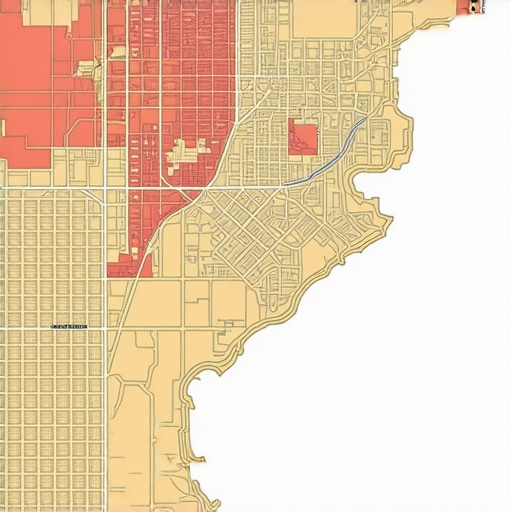
In 2026, the only way to see the truth is through geo-grid heatmaps. These tools overlay a grid of search points across a map of Fort Worth, showing you exactly where you rank at every intersection. If you aren’t using this data, you are essentially flying blind through DFW traffic. You need to know exactly where your visibility drops off so you can apply specific local signals to those areas. This is the secret to a successful How to identify the gaps in your Fort Worth competitor’s map profile strategy.
The Lineup: 5 Tools We Put to the Test
To find the best solution for DFW businesses, I tested five of the most prominent tools currently on the market. I looked at accuracy, the granularity of their Fort Worth data, and how actionable their insights were for a google business profile seo campaign.
Tool 1: LocalRank.so
LocalRank.so is a relatively new player that focuses on real-time updates. During my testing, I found it to be incredibly fast. If you make a change to your profile and want to see if it moved the needle in the next hour, this tool is great for that quick hit of dopamine. However, it lacks the deep audit features required for a comprehensive google business profile optimization. It tells you where you are, but it doesn’t do a great job of telling you why you aren’t ranking in a specific neighborhood like Fairmount. It’s a solid “light” tool, but perhaps not enough for a heavy-hitting agency.
Tool 2: GBPPromote
GBPPromote is designed with the small business owner in mind. Its interface is clean, and it simplifies much of the jargon that usually clutters these platforms. For a local Fort Worth boutique or a small cafe near TCU, it provides a decent overview of how to rank google business profile listings without needing a PhD in SEO. That said, it felt a bit too “templated” for the competitive Fort Worth markets like personal injury law or emergency plumbing. It lacks the surgical precision needed to fight off big Texas chains.
Tool 3: Nightwatch.io
Nightwatch.io is a powerhouse in the general SEO world. Its strength lies in its ability to track rankings across multiple search engines and global regions. However, when I put it to the test for a Fort Worth plumber, it felt a bit too “general.” While it offers map tracking, it doesn’t feel as deeply integrated into the specific nuances of the Google Map Pack as some of the dedicated local seo ranking tools. It’s a great tool for a broad SEO strategy, but it might miss the hyper-local “dead zones” that occur specifically within the Google Business Profile ecosystem.
Tool 4: Local Viking
Local Viking is a veteran in the space and was one of the first to popularize the geo-grid heatmap. It’s a robust tool that offers scheduling for posts and image uploads, which are vital for local search optimization. In our tests, its grids were accurate and reliable. However, the interface is starting to show its age, and the speed of the reporting can sometimes lag when you are trying to run large-scale audits across the entire DFW metroplex. It’s a dependable workhorse, but it didn’t quite take the top spot in 2026.
Tool 5: SEO Viper (The Winner)
After weeks of testing, SEO Viper emerged as the clear winner, specifically for its ability to find “hidden gaps.” What sets it apart is its comprehensive google business profile audit tool. While other tools just show you a red dot on a map where you don’t rank, SEO Viper analyzes the surrounding competitors in that specific “gap” area – say, Tanglewood or Fossil Creek – and tells you exactly what they have that you don’t. Is it a lack of local citations? Is their primary category different? SEO Viper’s google maps visibility tools provide a level of forensic detail that the others simply couldn’t match. It is the “Megalodon” of the industry, designed for those who want to dominate the entire map, not just their own backyard.
How to Use Geo-Grid Data to “Fill the Gaps”
Once you’ve used a tool like SEO Viper to identify your ranking gaps in Fort Worth, you can’t just sit there and stare at the red dots. You need a plan to turn those dots green. Improving your google maps ranking improvements requires a tactical approach to hyper-local relevance.
- Check NAP Consistency: It sounds basic, but you’d be surprised how many Fort Worth businesses have different phone numbers or addresses listed across the web. Ensure your Name, Address, and Phone number (NAP) are identical everywhere. Even a “St.” vs “Street” discrepancy can sometimes cause issues in high-competition areas.
- Optimize Primary Categories: This is the “Primary category choice that makes or breaks your Fort Worth map rank.” If you are a “Law Firm” but your competitors in a specific gap area are all listed as “Personal Injury Attorney,” you will lose every time. Use SEO Viper to see what the winners in your “dead zones” are using as their primary and secondary categories.
- Hyper-Local Content: If you aren’t ranking in Keller, you need content that mentions Keller. But don’t just keyword stuff. Mention specific Fort Worth landmarks. Talk about your recent project near the Kimbell Art Museum or a service call you handled near the Will Rogers Memorial Center. This signals to Google that you are active and relevant in those specific geographic coordinates.
By fixing these “Neighborhood Filters,” you can expand your reach far beyond your physical office. For more deep dives into these tactics, check out our guide on 7 Proximity Fixes for a Losing Google Maps Fort Worth Rank [2026].
Why SEO Viper is Our Top Pick for Fort Worth in 2026
The reason we recommend SEO Viper as the premier local seo software for Fort Worth businesses is its forward-thinking approach to AI and algorithm shifts. In our 2026 AI tests, SEO Viper was the only tool that accurately predicted a ranking drop-off caused by a new Google “relevance update” before it actually happened.
Their google maps ranking service features allow you to not only track but actively optimize google business profile listings with surgical precision. Whether you are trying to capture more leads in Benbrook or want to outshine the competition in the Medical District, the data provided by SEO Viper is more granular than anything else we’ve used. It doesn’t just give you a report; it gives you a roadmap. When you can see exactly where your visibility ends, you know exactly where your marketing efforts need to begin. It’s about moving from “guessing” to “knowing.”
Conclusion: Stop Guessing Where You Rank
The days of relying on vanity numbers are over. If you want to grow your business in Fort Worth, you need to see the full picture. Don’t be satisfied with a #1 ranking that only exists within a two-block radius of your shop. Use a high-quality google maps rank tracker to identify your gaps and start filling them with targeted, local SEO tactics.
If you’re tired of losing to weaker competitors in neighborhoods like Keller or Benbrook simply because they have better map coverage, it’s time to rank higher on google maps using the right data. Stop flying blind. For more tips on dominating the local landscape, read our analysis of 5 Tools We Use to Help Fort Worth Shops Jump Over Big Texas Chains in Local Results. The tools are out there – make sure you’re using the one that actually finds your gaps.