The Hidden Profile Settings That Keep Your Fort Worth Shop Off the Map
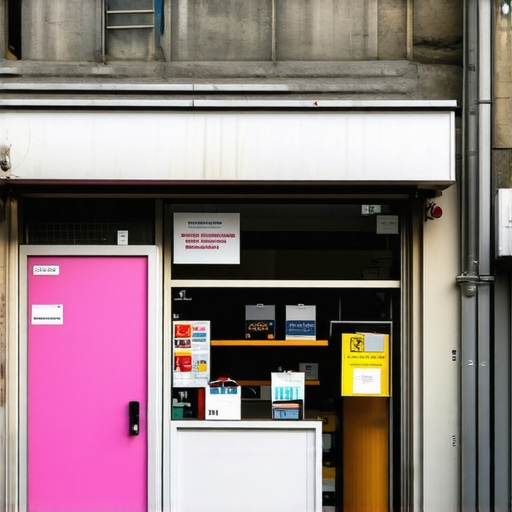
You’ve done the work. You’ve claimed your listing, uploaded a few photos of your storefront near Sundance Square, and you even managed to snag a handful of five-star reviews from your loyal Tarrant County customers. Yet, when you search for your services, your business is nowhere to be found in the coveted local map pack. You’ve become a “Ghost Profile” – a business that exists in Google’s database but remains invisible to the thousands of people searching for google business profile seo solutions in Fort Worth every day.
As an SEO expert who has spent years navigating the shifting sands of local search, I, Robby Keller, have seen this story play out hundreds of times. Many Fort Worth plumbers, lawyers, and HVAC technicians believe that ranking is a simple matter of “more reviews equals higher rank.” While reviews are vital, they are rarely the reason a profile remains buried on page four. According to Universal Search Research, an unverified or poorly optimized profile – specifically one with incorrect “hidden” technical settings – is the #1 reason for missing the Map Pack entirely. If you want to rank higher on google maps, you have to look deeper than the surface-level information your competitors are focusing on.
The Category Trap: Why One Wrong Choice Buries Your Fort Worth Business
One of the most common mistakes I see in the DFW area is what I call the “Category Trap.” Google allows you to select one primary category and up to nine secondary categories. Most business owners treat this as a quick checkbox, but it is actually the single most important “hidden” setting for google business profile optimization. Your primary category carries about 75% of the weight for your ranking signals. If you get this wrong, you are essentially telling Google to show your business to the wrong audience.
Consider a home services business in Tarrant County. If you are a specialized roofing company but you select “General Contractor” as your primary category because you occasionally do siding, you are diluting your relevance. When a homeowner in North Richland Hills searches for “emergency roof repair,” Google will prioritize the business that has “Roofing Contractor” as its primary category. By choosing the broader term, you’ve effectively buried your visibility for high-intent, specific searches. This is the primary category choice that makes or breaks your Fort Worth map rank. Even a slight misalignment can lead to a situation where a single category mistake hides your Business Profile Fort Worth from customers who are ready to buy.
To avoid this, you need to conduct a competitive analysis. I often recommend using google maps seo tools to see exactly which categories the top-ranking businesses in your niche are using. Don’t guess. If the top three locksmiths in Fort Worth are all using “Type A” as their primary category and you are using “Type B,” you are fighting an uphill battle against Google’s own internal logic. Refining these categories is the first step toward a successful google maps ranking service strategy.
The “Service Area” vs. “Physical Address” Conflict
Proximity has always been a major ranking factor, but as we move into 2026, the way Google interprets your location has become significantly more complex. There is a persistent debate on local search forums and Reddit regarding the impact of hiding your physical address. For Service Area Businesses (SABs) – like mobile mechanics or carpet cleaners – the temptation is to hide the home office address and simply set a broad service area covering all of North Texas.
However, recent data suggests that hiding your address can cause a noticeable dip in rankings because Google loses a definitive “proximity” signal. When you hide your address, you are essentially telling Google you don’t have a fixed point of origin. This triggers the “Neighborhood Filter,” a 2026 trend where Google’s algorithm prioritizes hyperlocal relevance. If your service area is set too wide – for instance, if you claim to serve everything from Denton to Burleson – you lose the “authority” needed to rank in specific, high-value neighborhoods like Magnolia Ave or the Clearfork development.
This is why your Google Maps Fort Worth pin is hidden from neighborhood searches. To increase google business profile visibility, you must balance your service area settings. Instead of selecting “Texas” or “Tarrant County,” try defining your service area by specific zip codes or smaller suburbs. This creates a tighter “relevance radius.” If you fail the “Five-Mile Test” – meaning you don’t rank in the top 3 within five miles of your actual location – your service area settings are likely the culprit. Utilizing google maps seo strategies that focus on local signals is the only way to overcome this proximity hurdle.
Attributes and Services: The Secret Language of 2026 AI Search
By 2026, Google’s AI-driven search (SGE) has become the primary way users interact with local listings. When someone asks their phone, “Where can I find a Fort Worth cafe with outdoor seating and fast Wi-Fi?”, Google doesn’t just look at your business name. It scans the “Services” and “Attributes” sections of your profile to find the answer. These are often neglected “hidden” settings that can make or break your google maps lead generation.
Most business owners leave their “Services” section as a basic list of auto-populated keywords. This is a mistake. To rank google business profile listings effectively in the modern era, you must add custom descriptions to every service you offer. If you are a Fort Worth law firm, don’t just list “Personal Injury.” Write a 300-character description that mentions “Tarrant County courthouse experience” and “Fort Worth accident representation.” This provides the semantic context that AI needs to match your profile to specific voice search queries.
Furthermore, pay attention to the new 2026 attributes. Google now prioritizes profiles that include “3D Tours” and “Video Content.” If you haven’t updated your attributes to reflect your current amenities (like “Identifies as Black-owned,” “Veteran-led,” or “Gender-neutral restroom”), you are missing out on niche search traffic. I suggest using local seo software to track how these attribute changes correlate with your rank fluctuations. It’s often the smallest detail – like checking the box for “Online Estimates” – that pushes you ahead of a competitor who hasn’t updated their profile in six months.
The “Shadowban” Reality: Verification and Suspensions in 2026
One of the most frustrating experiences for a Fort Worth business owner is seeing their profile vanish overnight. In 2026, Google has ramped up its automated verification hurdles to combat spam. This has led to an increase in “soft suspensions” or “shadowbans,” where your profile technically exists but is suppressed in search results.
As an expert, I’ve noted that even simple profile edits can trigger a manual review or suspension. Changing your phone number, your business name (even slightly), or your primary category can flag your account. Google’s AI is hyper-sensitive to “NAP” (Name, Address, Phone) inconsistency. If your Google Business Profile doesn’t perfectly match the data on your website or your official Tarrant County business registration, you risk a suspension.
To stay safe, you need to implement 7 Fort Worth local SEO fixes for small shops in 2026, which include verifying your data across all local directories before making changes to your GBP. If you do find yourself suspended, don’t panic and create a new profile – that will only result in a permanent ban for “duplicate listings.” Instead, follow a structured reinstatement process. Understanding the technical nuances of local seo services is essential here, as the verification process often requires video proof of your physical location, including street signs and your business license.
Engagement Signals: Beyond the 5-Star Review
If you think google business profile seo stops at the setup phase, you’re missing the most dynamic part of the algorithm: engagement signals. In the past, you could “set it and forget it.” In 2026, a static profile is a dead profile. Google tracks how users interact with your listing to determine your authority. This includes how many people click your “Request a Quote” button, how long they spend looking at your photos, and whether they engage with your “Google Business Profile Posts.”
Think of your GBP as a social media feed for your business. You should be posting updates at least twice a week. Whether it’s a photo of a completed project in Arlington Heights or a “Deal of the Week” for your West 7th shop, these posts signal to Google that your business is active and relevant. High engagement directly improves your google business profile ranking.
Additionally, the “Q&A” section is a goldmine for local map pack seo. Many business owners ignore the questions posted by the public, or worse, let incorrect answers from “Local Guides” stand. You should proactively populate this section. Ask and answer your own frequently asked questions. Use keywords naturally in these answers to help Google understand your niche. For example: “Does your Fort Worth HVAC company offer 24/7 emergency repair in Keller?” “Yes, we provide 24/7 emergency HVAC repair for all Keller residents.” This is a powerful way to capture long-tail search traffic and build trust simultaneously. For more on maintaining an active profile, check out our Google Maps Fort Worth optimization: a step-by-step guide for evening success.
Conclusion: Reclaiming Your Spot in the Fort Worth Map Pack
Ranking in the Fort Worth map pack isn’t about luck, and it’s certainly not just about who has the most reviews. It’s about mastering the technical, often “hidden” settings that Google uses to categorize and trust your business. From choosing the correct primary category to navigating the complexities of the 2026 Neighborhood Filter and AI-driven attributes, every detail matters.
If your business is currently invisible, start by auditing your categories and service areas. Ensure your attributes are fully filled out and that you are engaging with your profile through regular posts and Q&A management. The competition in Tarrant County is only getting tougher, and those who ignore the technical side of google business ranking will continue to be left off the map.
Don’t let your shop remain a “Ghost Profile.” I encourage you to use a google business profile audit tool today to see where your gaps are. If you’re ready for a professional deep dive that goes beyond the basics, contact DFW Local SEO Services. We specialize in turning invisible shops into local landmarks. Reclaim your spot in the Map Pack and start generating the leads your business deserves.